From mouse control to feeding beetles - the secret life of owls
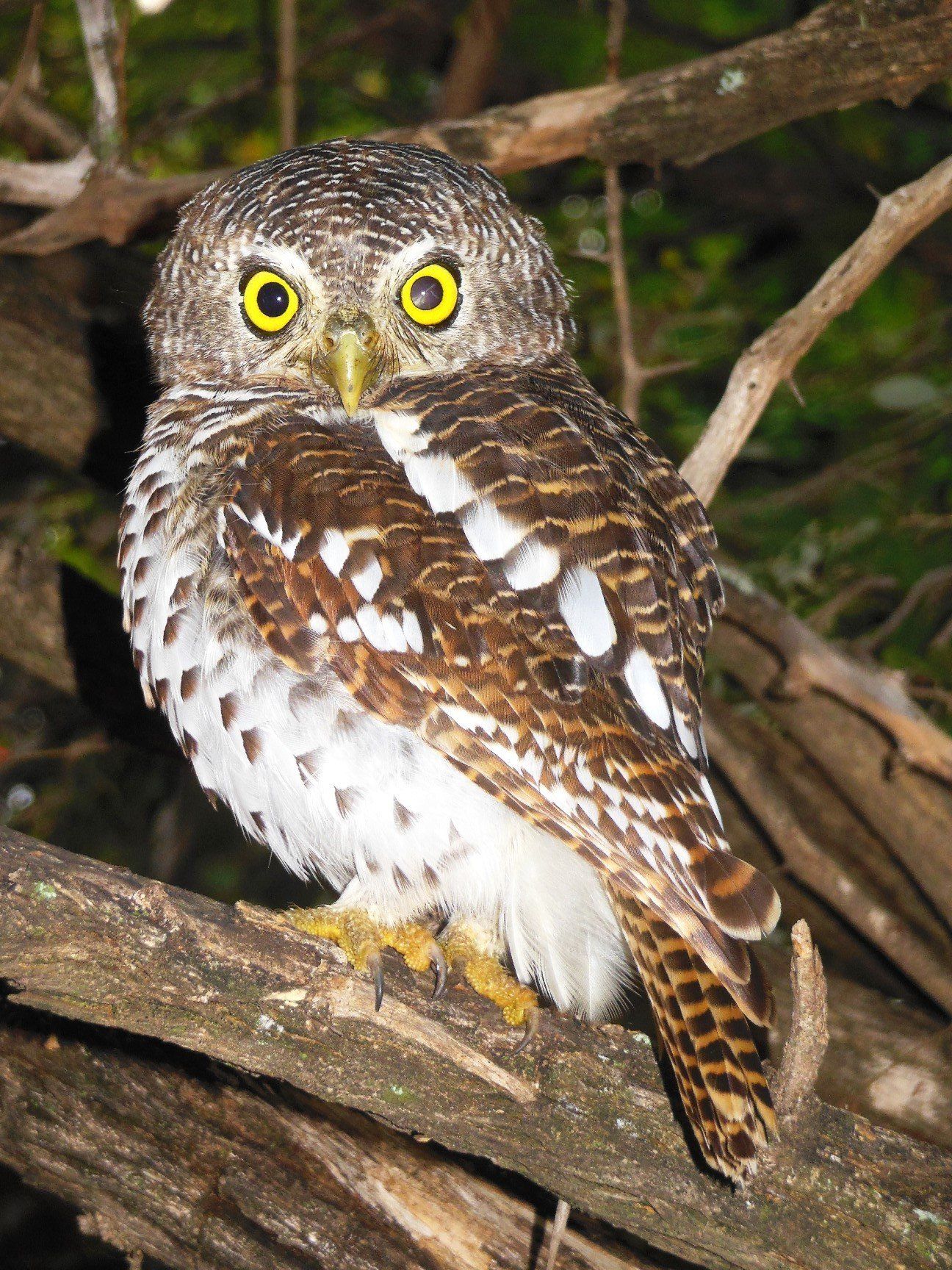
Renowned for their silent flight and legendary eyesight, owls are some of the coolest, and most misunderstood birds of prey in the African bush.
Here at Sausage Tree Safari Camp we're fortunate to have regular sightings of a number of owl species, some in broad daylight. It's not unusual to see the wonderful little pearl-spotted owlet and its cousin, the African barred owlet, out on morning and afternoon game drives when the sun is still shining brightly. As the sun goes down, however, we're more likely to see the spotted eagle owl, scops owl and and Southern white-faced owl.
Common belief has it that owls can see in the dark. Actually, they can't see in complete darkness but rather use ambient light like starlight and moonlight to amplify their sight and help them focus in the dark. It's actually their hearing that makes owls such effective night-time predators. They use their ears to pinpoint prey and have asymmetrical hearing with one ear located slightly higher on their heads than the other. So when you see an owl characteristically bobbing its head up and down, it's using its ears to hone in on movement, using what we call 3D hearing to assess how far away a potential meal is and whether it is in the branches of a tree or on the ground.
An owl's ability to fly virtually silently is down to its super fine, "furry" wing feathers that help to muffle all sound. So effective are these feathers that we humans have borrowed their tech in archery, using feather-like "silencers" on bow strings to dampen the sound of them loosing arrows.
It's silent flight that allows owls to be such successful killers and the African bush's chief rodent control officers, capable of consuming thousands of mice each year. An owl will regurgitate the fur, feathers and bones of its prey in a pellet. Although moist when first regurgitated, these pellets soon dry out and become their own self-contained ecosystem, playing host to moth and beetle larvae as well as fungi. The larvae eat the fur and feathers and use some of it in the construction of their cocoons, which they build near the host pellet.
The varying sizes and shapes of the local owls means that they are not in direct competition with one another, feeding on prey species from smaller birds and rodents to scrub hares and fish. The Pel's fishing owl is top of the list of riverine birds that birders come to the Balule Private Nature Reserve to see, but it's not alone in its pescatarian pursuits - we've spotted Verreaux's eagle owl and spotted eagle owls catching tilapia from the waterhole in front of our camp!
Of course, a lot of guests hear owls long before they see them (if they are lucky enough to spot them on a game drive or here in camp). The most common calls in the night-time bush are of the scops owl and the pearl-spotted owlet, which can easily be distinguished from the African barred owlet by its distinctive call (and the fact that it has "false eyes" in the feather markings on the back of its head).
Throughout history owls have been persecuted because of the belief that they are harbingers of death and doom. Some African cultures believe they are omens of bad luck and ill health, threatening their very existence, and kill owls on sight. Along with modern pesticides and road deaths, this fear has contributed to an overall reduction in owl numbers, with many species now listed as vulnerable. Today, thankfully, dedicated education programmes and outreach initiatives are helping to develop a new understanding of the importance of owls in both urban and rural communities.