Let's hear it for hippos - fish feeders of the Olifants!
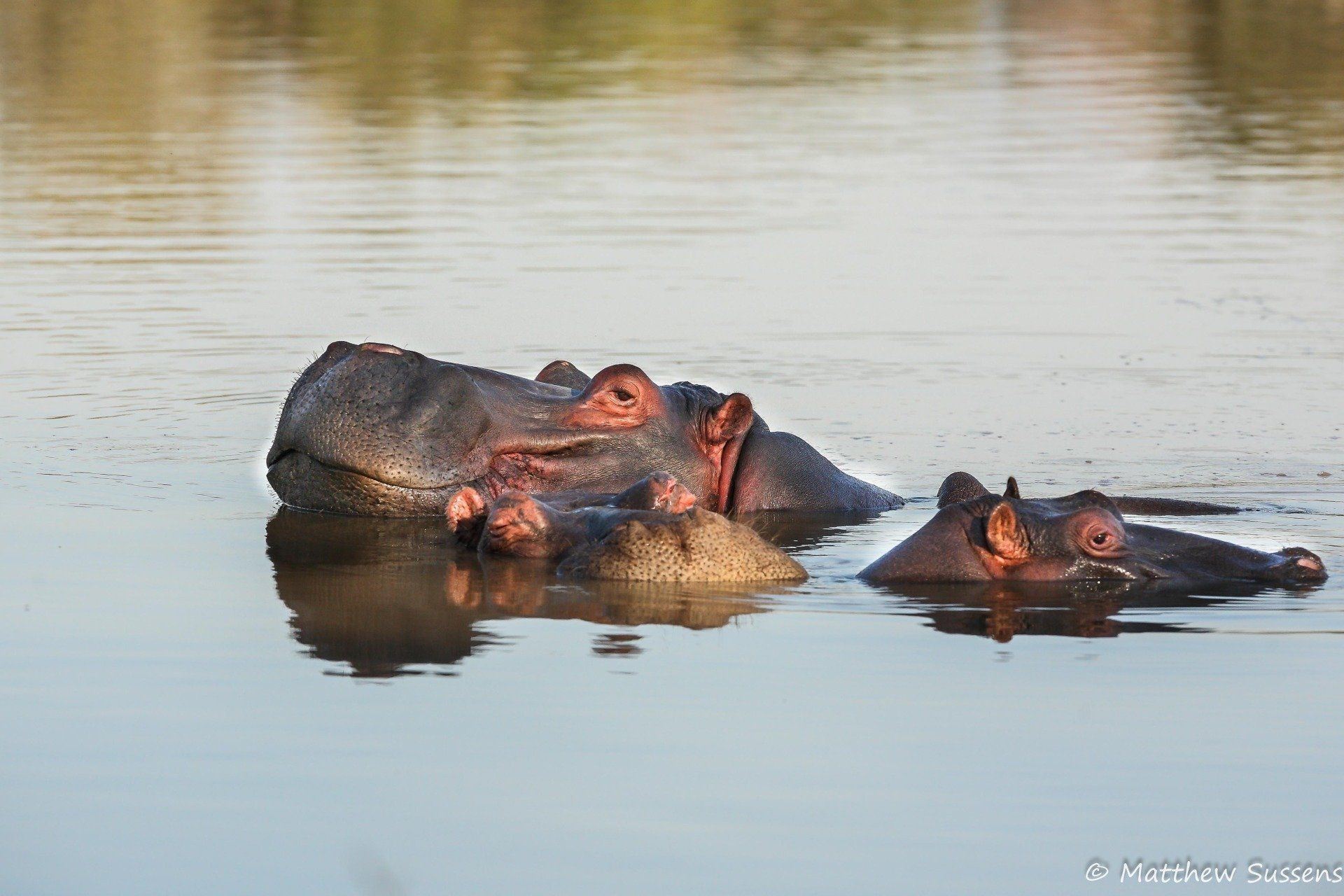
The debilitating drought that ended five years ago saw the Kruger National Park lose almost half of its hippo population, with an estimated 4000 of these water-dependent animals dying, not as you'd imagine, from a shortage of water, but due to a shortage of food.
Drought always hits hippo populations hard as they depend on good grazing when they leave the safety of the water at night, travelling up to 20km away from the water to feed mostly on grasses. They can consume up to 50kg of grass in one night, acting like a biological lawn-mower.
Here in the Olifants Nature Reserve, Greater Kruger, whilst we didn't lose thousands of hippos, we did notice a significant drop in numbers during the drought, as with most of our larger herbivores. Thankfully numbers are now recovering nicely, which is good for the Olifants River and the other water sources on the reserve.
Hippos are critical for healthy rivers for an unusual reason - their poop. Hippo dung provides valuable nutrients for fish and other aquatic species, so when you see a hippo defecating in the water, think positive thoughts! However, as with any good thing, too much of it can cause problems. When water sources like dams and seasonal rivers shrink, too much hippo dung can prove toxic to aquatic life, primarily because of the absorption of dissolved oxygen.
Hippos spend their days in the water, and can move through it quite rapidly when they need to. They're not good swimmers, but generally walk or run along the bottom of rivers or dams, surfacing every three to five minutes to breathe. They can sleep underwater too, thanks to the process of surfacing to breathe being a subconscious one.
Hippos are trailblazers. Literally. They have an enormous impact on the land surrounding river systems and dams as they generally take the same paths each night to feed, clearing vegetation and creating hard surfaces as they constantly move across the ground. These paths are followed by other animals as they offer direct access to water.
Hippos are very dangerous due to high levels of agression, most especially in bulls which are extremely territorial. They are also exceptionally nervous and when out of the water will seek to escape to it when startled or alarmed. Their bite can be fatal, thanks to their long, sharp incisors and canines which brush past one another in a scissor action, plus their incredibly powerful jaws.
Territorial bulls preside over a relatively small stretch of river, or waterholes and dams. In its territory a mature bull will dominate a pod of females and babies, as well as juveniles and younger bulls which are allowed to stay in the pod as long as they remain submissive. Territories primarily exist to establish mating rights with the females and fights between bulls invariably revolve around dominance.
Before coming to blows, bulls will gape at one another, opening their huge mouths to almost 180 degrees, showing off their canines and incisors in a threat display. The incisors point forward, like tusks, and can reach up to 40cm in length. The super-sharp canines can grow up to 50cm in length. They are used in combat and play no role in feeding.
A hippo's skin has very little hair. It is also very sensitive to the sun, which is why hippos prefer to stay submerged during the hottest periods of the day. They secrete a red-coloured oily substance that acts as a natural sunscreen, but they still need to stay in the water as much as possible as too much exposure to the sun causes their skin to crack.
Hippos are very vocal animals and are able to communicate above and below the water at the same time. They achieve this courtesy of a fatty area around their necks which vibrates when the hippo vocalises through its nose, sending the sounds waves out into the water at the same time. The sounds are amplified by the water and can be heard over large distances, and express important information like "this is my territory" and "I am here, so stay away".
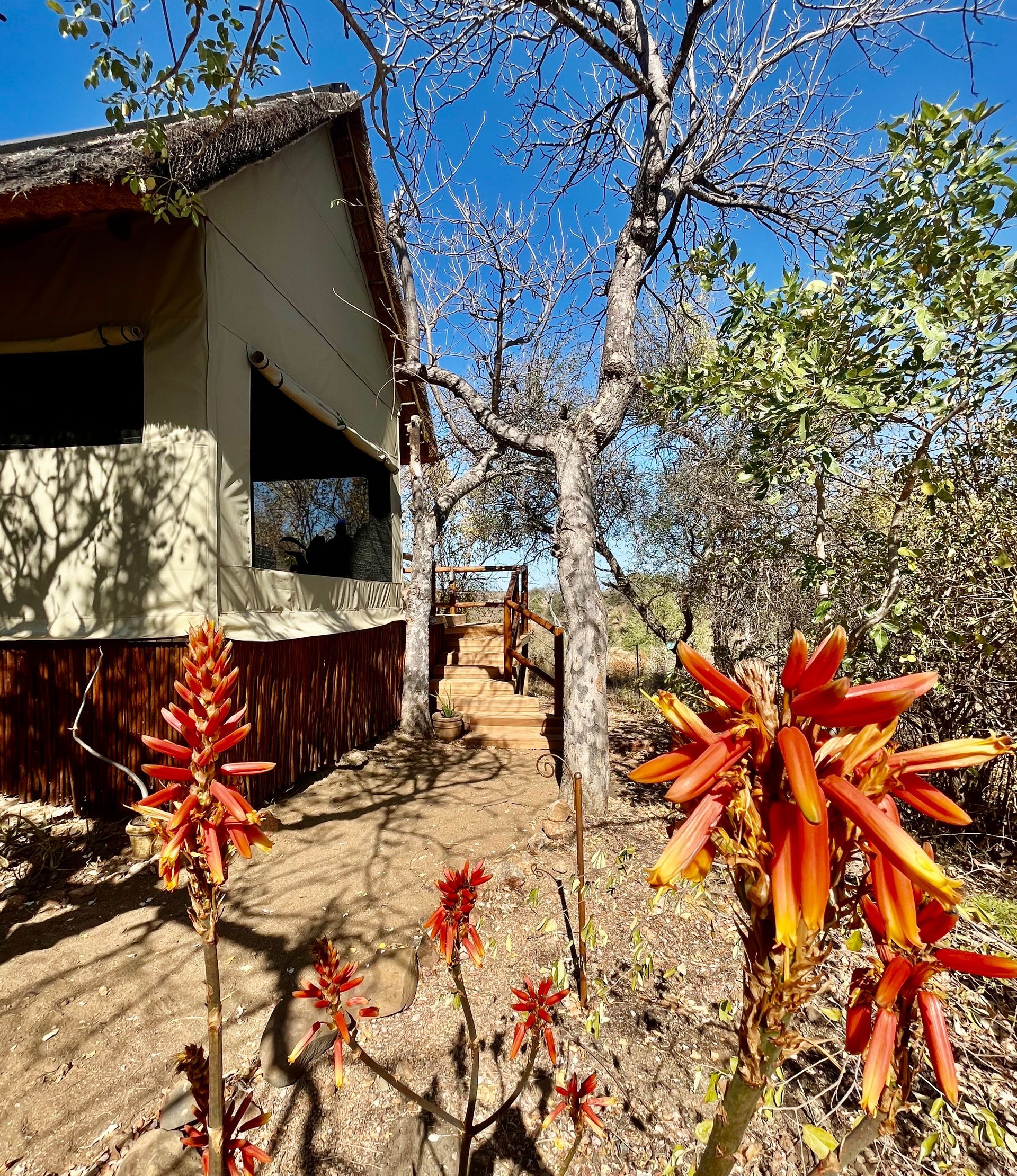
Here at Sausage Tree Safari Camp we love for our guests to experience the sounds the hippos make, which always remind us of someone guffawing at a particularly rude joke!